
Dauphin County Resident Lookup Coverage
There is no official countywide roster of every person who lives in Dauphin County. Instead, a resident lookup joins record systems with narrow purposes. The Assessment file can connect a current owner to a parcel. A recorded deed can place a party in a conveyance. Court, estate, marriage, voter, and vital channels each supply a different kind of confirmation. A missing result is not proof that a person was never present, because records can be sealed, restricted, removed under retention rules, or held only at a counter.
| Record | What it can confirm | Custodian or route | Access boundary |
|---|---|---|---|
| Assessment parcel card | Owner, mailing address, situs, parcel and deed reference | Dauphin Property Info or Tax Assessment | Free counter inspection; not a household list |
| Recorded instrument | A party’s role, date, UPI and legal-description clues | Recorder AcclaimWeb | Index first, Recorder remains the authority |
| Court docket | Case placement, participants, status and events | UJS Case Search | Public docket, not the certified file |
| Registration channel | An individual’s status, polling place and ballot-status information | PA Check My Voter Registration | Not a countywide name or street roster |
| Vital or county family record | A dated birth, death, marriage, estate or court event | State Archives, DOH, or Register/Orphans’ Court | Time period and eligibility control copies |
Begin with a parcel, docket, certificate number, or other narrow key whenever possible. A surname by itself is weak. The property card concerns ownership, not everyone at an address, and a deed party may be a former rather than current owner. Those limits are exactly why the records should be compared instead of treated as one answer.
Dauphin County Docket Name Checks
The County directs criminal docket users to the statewide UJS portal. Select Participant Name, enter last and first name with an optional date of birth, choose Dauphin County, then narrow by docket type, category, status, or filing dates when appropriate. The result inventory includes docket number, court type, caption, case status, filing date, primary participants and a link to the docket. Docket detail can include events, court dates, filings and financial entries. It is an index to the case record, not a conclusion about a person.
A public UJS result is an inventory rather than a biography. The visible result layer can contain the following fields:
- Docket number and court type
- Caption, filing date, and case status
- Primary participants and available date-of-birth fields
- A docket link for events, financial entries, court dates, and filing placement
| Participant route | Last name, first name, optional DOB, then Dauphin County |
|---|---|
| Case identity route | Docket, citation, complaint, incident, OTN, FID, SID, or SSN fields appear as alternative modes |
| Context filters | Court, judicial district, docket type, category, status, and filed-date range |
| County civil route | CountySuite Civil Case Search, with the Prothonotary holding the authoritative file |
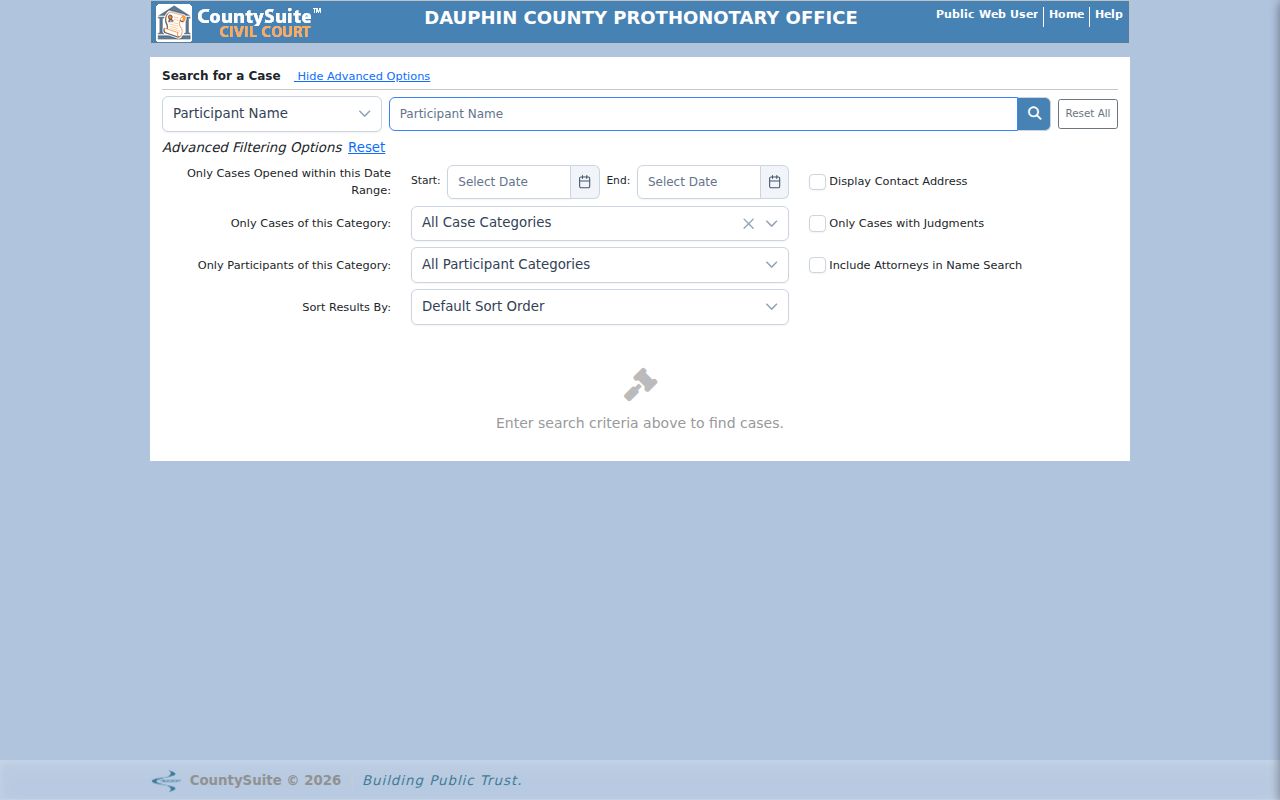
The CountySuite civil case search is separate from the criminal route. County research found a system-transition caution, so an unavailable civil entry needs a Prothonotary file or copy request rather than an assumption that no case exists. Juvenile, sealed, expunged, limited-access, and retention-destroyed matters are also outside a public-search conclusion.
County docket instructions and a public terminal can help with criminal records, while the Clerk of Courts does not provide case details by telephone. A written county criminal-record search requires a case number or a complete defendant name plus date of birth. Official fee pages conflict between $10.90 and $23 for a search, so call the Clerk at 717-780-6530 before sending payment.
The County’s civil-case search screen illustrates that a name query belongs to a particular court channel, not to a single county person file.
Use the displayed record as a lead, then request the specific file from the office that keeps it when the question requires an authoritative copy.
Note: Record the court, docket number, party role, and date before comparing a docket result with another Dauphin County record.
Dauphin County Voter Status Is Individual
Pennsylvania Check My Voter Registration is the official one-person route for registration, polling-place, and mail-ballot status. It is not a public browser for a county surname, a block, or a street. The live form was protected from automated inspection during the research, so current labels should be read in a browser rather than guessed. Dauphin Registration & Elections handles local questions at 1251 South 28th Street in Harrisburg, by phone at 717-780-6360.
There is a different statutory channel for public voter lists. The state voter-list request form offers public-information, street, walking, and full-export formats for $20 per county selected. It requires identity, signature, a stated purpose, and an attestation that confines use to the purposes allowed by the Election Code. Voting history records whether someone participated in an election, never how that person voted. Public output also excludes electronic signatures and SURE identification numbers.
Dauphin County Resident Lookup Steps
Verification means anchoring a name to one documented fact, then seeking independent agreement. Do not assemble a result from unrelated entries that merely share a surname. Parcel identifiers, legal descriptions, case numbers, issuing offices, and dates give a record trail that another researcher can check.
- Search Property Info by owner surname, site address, or parcel number. Keep the situs, municipality, parcel or UPI, mailing field, and deed reference together.
- Search the same name in AcclaimWeb. Narrow to the direct or indirect party role, Deeds group, and a date range, then compare the UPI or legal description to the parcel.
- For a public court reference, use UJS Participant Name with Dauphin County and an appropriate docket type. Compare the court, date, party role, and public context rather than relying on the name alone.
- Use the Register or State Archives for the correct dated event. If a certified copy is needed, request it from the custodian that issued or holds that record.
- Docket
- A court’s numbered case record and event list. It helps locate a case but is not automatically the complete certified file.
- Index and image
- An index identifies a record by fields such as name, date, or number. An image is a view of the underlying document, when public access allows one.
- Certified copy
- A copy the responsible office certifies as official. Eligibility, fees, and the request method depend on the record type.
- UPI
- A county-certified parcel number that connects real-estate documents and property records more reliably than a street spelling alone.
Note: A matching mailing address is useful evidence, but it can differ from the property location and does not identify every occupant.
Dauphin County Vital Record Time Lines
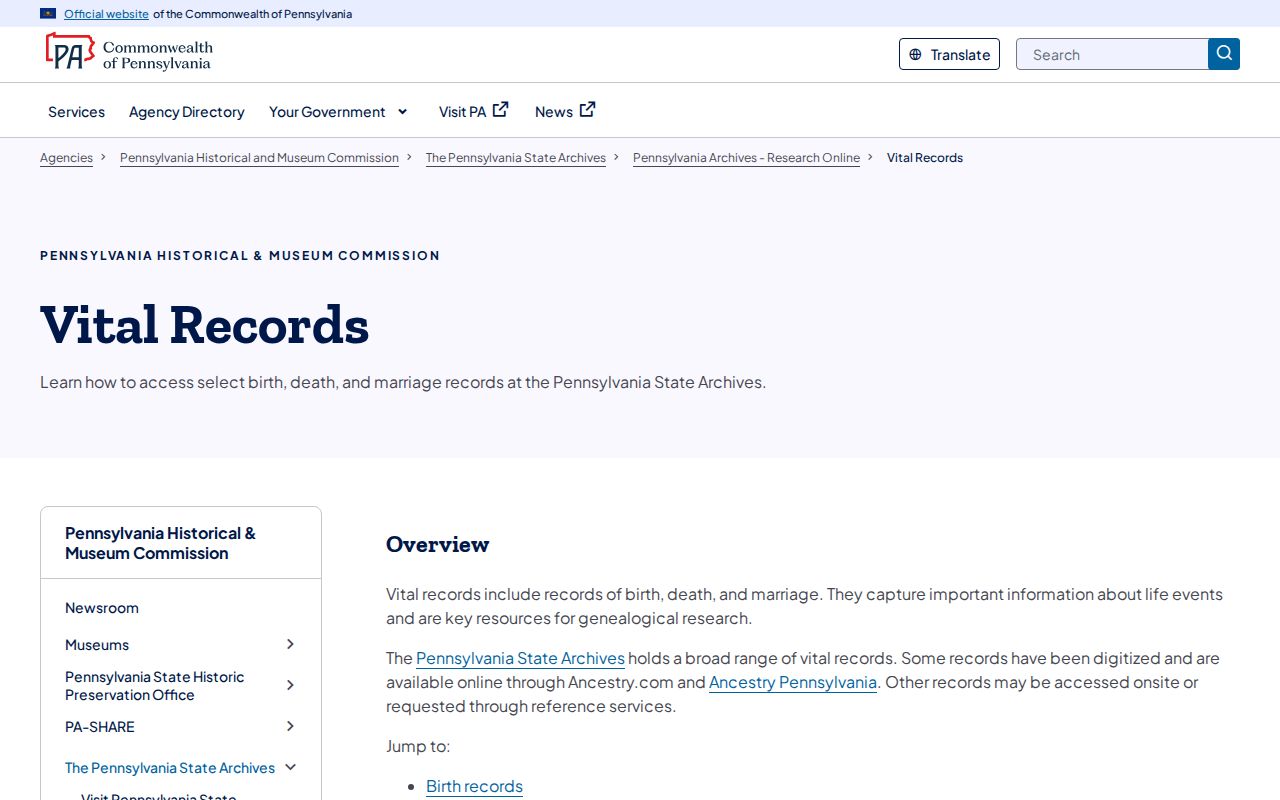
Dates determine the correct custodian. The Pennsylvania Department of Health holds statewide birth and death records from 1906 forward. Under the Vital Statistics Law, noncertified birth records enter the public period 105 years after birth and deaths after 50 years. At the August 31, 2026 research date, that means State Archives public-period indexes extend through births in 1920 and deaths in 1975. The indexes find a certificate number, then the Archives supplies a noncertified copy for the open period.
Dauphin County’s Register of Wills and Clerk of Orphans’ Court holds local 1893 to 1906 birth and death records, County-issued marriage licenses from 1885 to the present, and estate and Orphans’ Court material from the late 1700s. Register Cloud Search requires registration. Registered users may search and view images free; downloads are $0.50 per page plus a $2 transaction charge, or the portal offers a $25 monthly subscription. Divorce records follow the county court file, normally through the Prothonotary, rather than a state vital certificate.
The Pennsylvania State Archives vital-record indexes show the public-period research path for a dated event.
For a newer birth or death certificate, use DOH’s official vital-record ordering channel and its eligibility rules instead of treating an archival index as unrestricted access.
Dauphin County License and Entity Checks
Some state records can confirm a narrow affiliation only when the person or entity is already identified. A Pennsylvania notary search accepts a name or commission ID, with Current and All changing the status scope. The attorney directory supports last name, first name, ID number, city, county, status, and a second term. Neither tool establishes a home address or a general resident list. Match the license or commission number, stated status, date, and name before relying on a result.
The Pennsylvania notary verification is a commission-specific check, not a substitute for the county records used in a Dauphin County resident lookup.
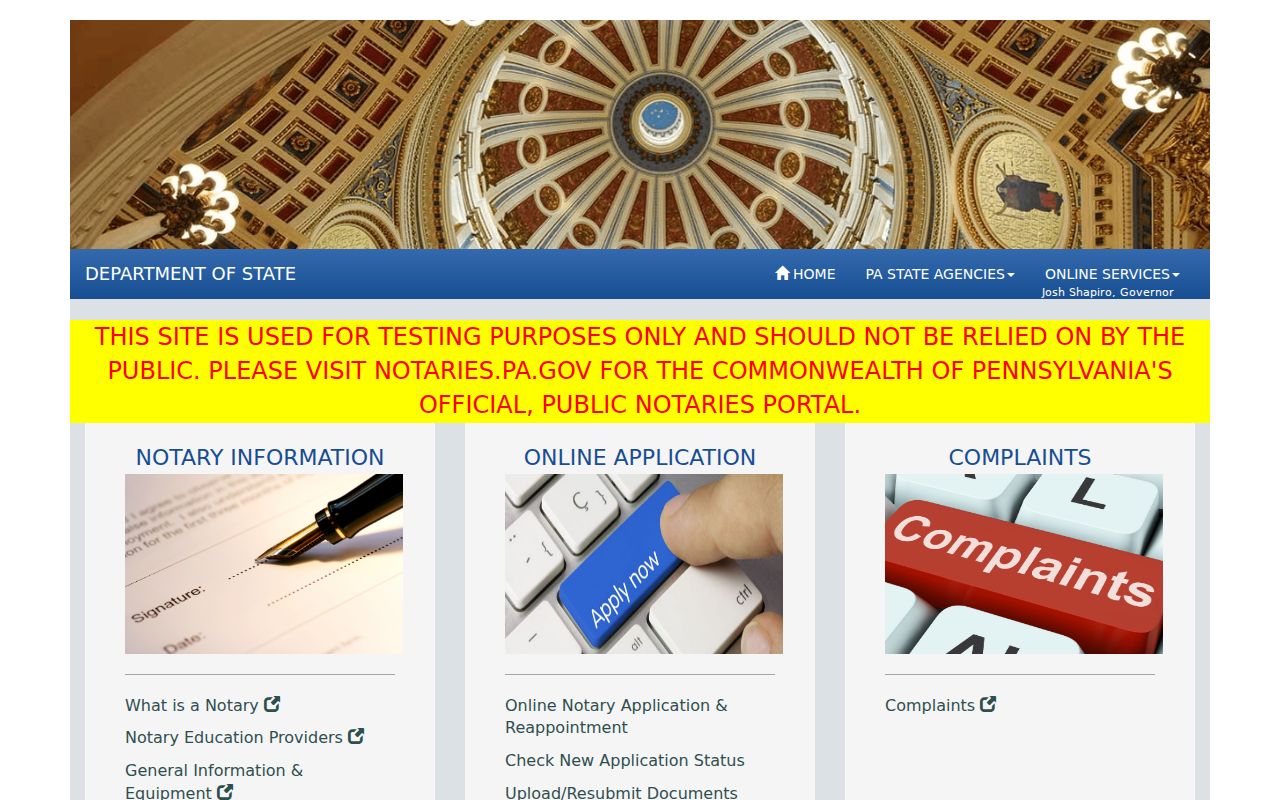
Its current-versus-all choice matters because an expired commission and an active commission answer different questions.
The Pennsylvania attorney directory provides a different, regulated record route with its own name, ID, city, county, and status controls.
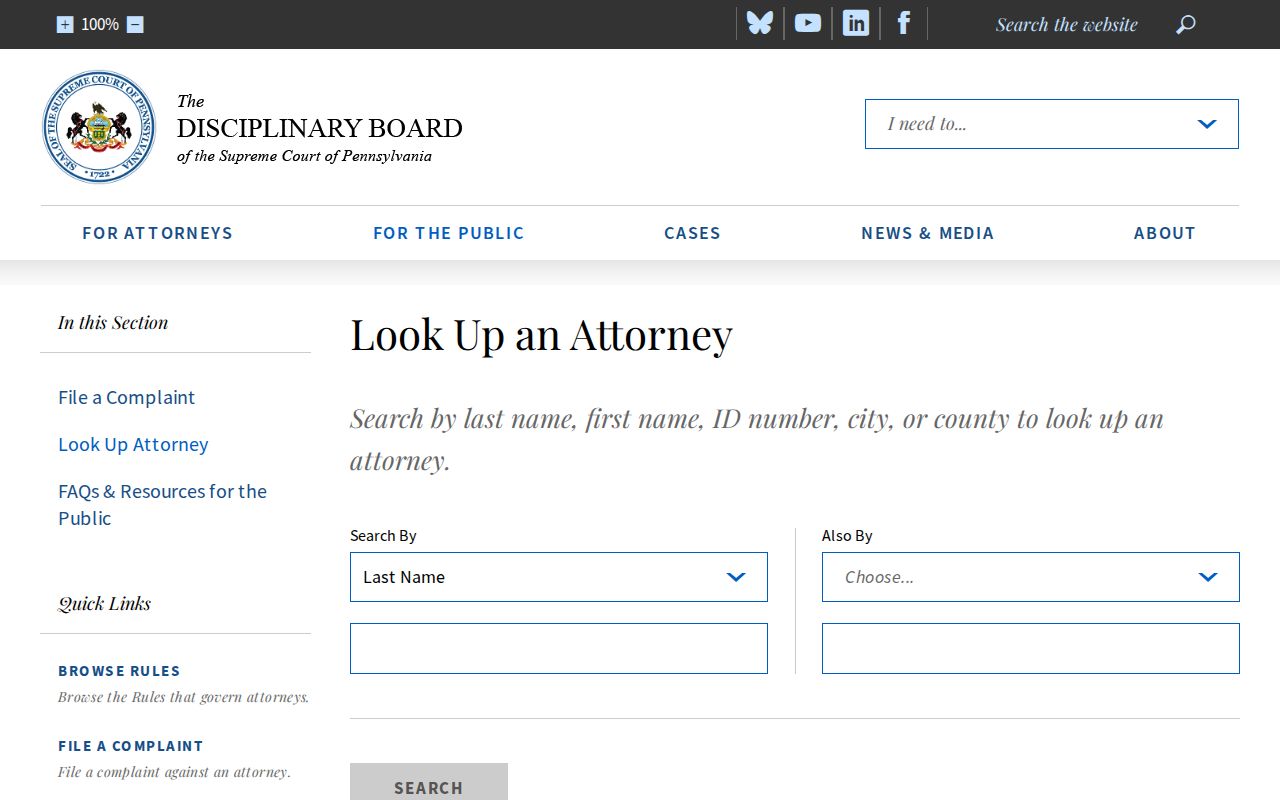
A public profile can show license status, contact information, public discipline, and malpractice-insurance information, so preserve the profile date and identifier with any verification notes.
Dauphin County Resident Record Placement
Record placement is the strongest same-name check. A land result should share a PID or UPI and legal description. A case result should share its court and docket number. An estate, marriage, or vital result should share its issuing office and event date. This discipline keeps a real person from being merged with someone of the same name in a different municipality or decade.
When a known administrative record is unavailable online, the Pennsylvania Right-to-Know Law is a fallback for an existing record held by the correct agency, not a command to create a person list. The Office of Open Records explains the request and appeal route. The RTKL’s five-business-day response rule does not override court sealing, vital-record restrictions, voter-law conditions, or other record-specific privacy laws.
Dauphin County Resident Lookup Limits
Public access has hard stops. Court rules restrict sealed, juvenile, and expunged matters. RTKL exemptions protect sensitive information, including Social Security numbers, driver-license numbers, financial-account information, and certain home addresses. Pennsylvania’s Address Confidentiality Program gives qualifying participants a substitute mailing address for specified records. It supports a safety plan, but it is not a retroactive deletion of every historic filing.
For a factual error, contact the custodian named on the record, such as Assessment, the Recorder, Registration & Elections, a court clerk, DOH, or the relevant state board. Bring the record reference and underlying proof. Do not request protected information through an unrelated office or mistake redaction for a portal failure.
Lawful use. Use a Dauphin County resident lookup for lawful personal, family-history, estate, civic, or safety research. Pennsylvania law prohibits stalking and harassment, and protected or sealed information must not be pursued or exposed.
Note: If a record suggests an immediate threat, stalking, impersonation, or fraud, preserve the details and contact local law enforcement rather than publishing personal information.