
Finding Dauphin County Residents
A useful Dauphin County residents directory search begins with a key that an office actually maintains. Use a current address or parcel when the question concerns a property. Use the exact name, county, and a docket type for a court matter. Use a dated address when the goal is family history. The County Tax Assessment office, Recorder of Deeds, courts, Register of Wills, and Historical Society all keep different parts of the trail. A match in one index is a lead, not proof that every person with that name is the same individual.
Start with the administrative record closest to the fact. The assessment file concerns real estate. A deed index concerns parties to a recorded document. The state voter checker confirms an individual registration status, while a statutory list follows separate conditions. These distinctions keep a residents directory search from turning a mailing address, an old directory line, or a party name into an unsupported claim about a whole household.
- Search the county property record by address, owner name, Property ID, or deed reference to establish the parcel.
- Carry the parcel number or owner name to the Recorder’s recorded-document search and compare the legal description and date.
- For a court reference, use a participant name with Dauphin County and the right docket type, then identify the correct custodian for the file.
- For an older address, compare a dated Harrisburg directory with maps, census material, and the recorded trail.
- Ask the office that created a specific existing record when an online index does not supply it.
Note: Keep the source date and record number with each result so later checks do not merge similar names or addresses.
Dauphin County Resident Records Offices
Dauphin County divides resident-related records among several custodians. The Recorder tracks recorded land instruments. Tax Assessment maintains the current parcel and assessment file. Registration & Elections administers local election services, while Pennsylvania provides the individual registration-status tool. The Clerk of Courts, Prothonotary, and Register of Wills each hold different court or estate material. For a street-by-street land trail, use the more detailed Dauphin County street directory route after identifying the parcel.
Dauphin County Recorder of Deeds
101 Market Street, Room 102
Harrisburg, PA 17101
717-780-6560
Dauphin County Tax Assessment
2 South Second Street, 2nd Floor
Harrisburg, PA
717-780-6101
Dauphin Registration & Elections
1251 South 28th Street
Harrisburg, PA
717-780-6360
Pennsylvania voter-status lookup
The Recorder counter and Tax Assessment counter are open on weekdays from 8:00 a.m. to 4:30 p.m. Their offices are not interchangeable. A probate, marriage, civil, or criminal request belongs with its own custodian rather than the land-record office.
Dauphin County Property Record Trail
Dauphin Property Info is the County-directed starting point for a parcel question. Its assessed-property record may show the current owner, owner mailing address, situs address, values, selected deed information, lot and building details, and a sketch. The mailing address can be outside the parcel, so it is not a list of everyone living there. Use the Property ID or recorded deed reference to connect the assessment record to the next source.
This captured Property Info screen shows the county’s property-search entry point.
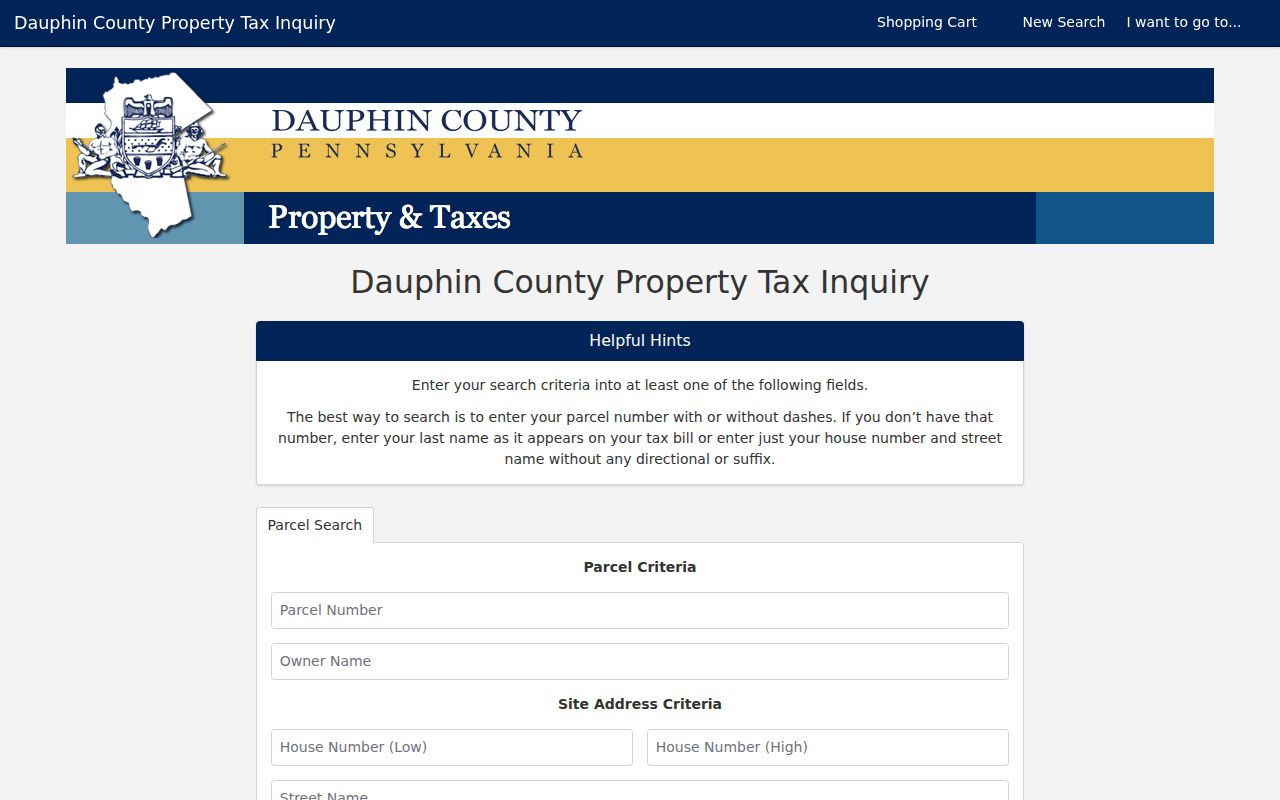
Use the screen to begin an owner or address check, then save the parcel identifier before changing tools.
| Property Info field | How it helps |
|---|---|
| Owner Name | Finds a candidate using the spelling on a tax bill. |
| Property address | Locates the situs, or physical property location. |
| Property ID | Bridges a parcel to County map and recorder work. |
| Recorded-deed reference | Supplies a lead to compare in the deed index. |
The County Parcel Viewer supplies the map half of this process. It accepts a full Parcel ID or starting characters, returns map candidates, and links the selected parcel to More Info. Its display includes municipality, acreage, street components, and land fields. The viewer does not offer an owner-name map search, a whole-address roster, or a bulk neighbor export. Because it is refreshed weekly and can lag the Assessment file, confirm a current owner or property value in Property Info or with Tax Assessment. That practical split prevents a map result from being treated as a complete residents directory result.
Current Dauphin County Resident Directories
No countywide public roster establishes every current resident. Instead, several Dauphin County records act like partial directories because each was made for a separate public purpose. Their scope matters. An owner is not necessarily an occupant, a recorded party is not necessarily current, and an individual voter-status result is not a broad name or street browser.
| Record source | What it can confirm | Custodian | Access path |
|---|---|---|---|
| Assessment parcel file | Owner, mailing and situs connection | Tax Assessment | Property Info or office inspection |
| Recorded documents | Named parties and land transaction details | Recorder of Deeds | AcclaimWeb or counter |
| Public dockets | Case placement and docket events | Courts and clerks | UJS, CountySuite, or counter |
| Estate and marriage records | Register or Orphans’ Court matter | Register of Wills | Cloud Search and office |
| Historic directories | Dated address and occupation clues | Historical Society | Library and online collection |
When the task is to confirm one person rather than a parcel, use the separate Dauphin County resident lookup workflow. It begins with the narrowest record key and checks independent facts instead of treating a broad surname match as an answer.
Dauphin County Deed Index Clues
The Recorder’s AcclaimWeb has Simple Search, Name, Instrument Number, document type, book and page, record date, consideration, UPI number, municipality/comments, and Alpha Index modes. Its Name search distinguishes direct and indirect parties, accepts paired-name searching, and offers Starts With, Contains, and Exact matching. A UPI is the parcel identifier that provides a stronger bridge than a street spelling when an address has changed.
The Recorder search capture displays the official entry screen and its menu of search modes.
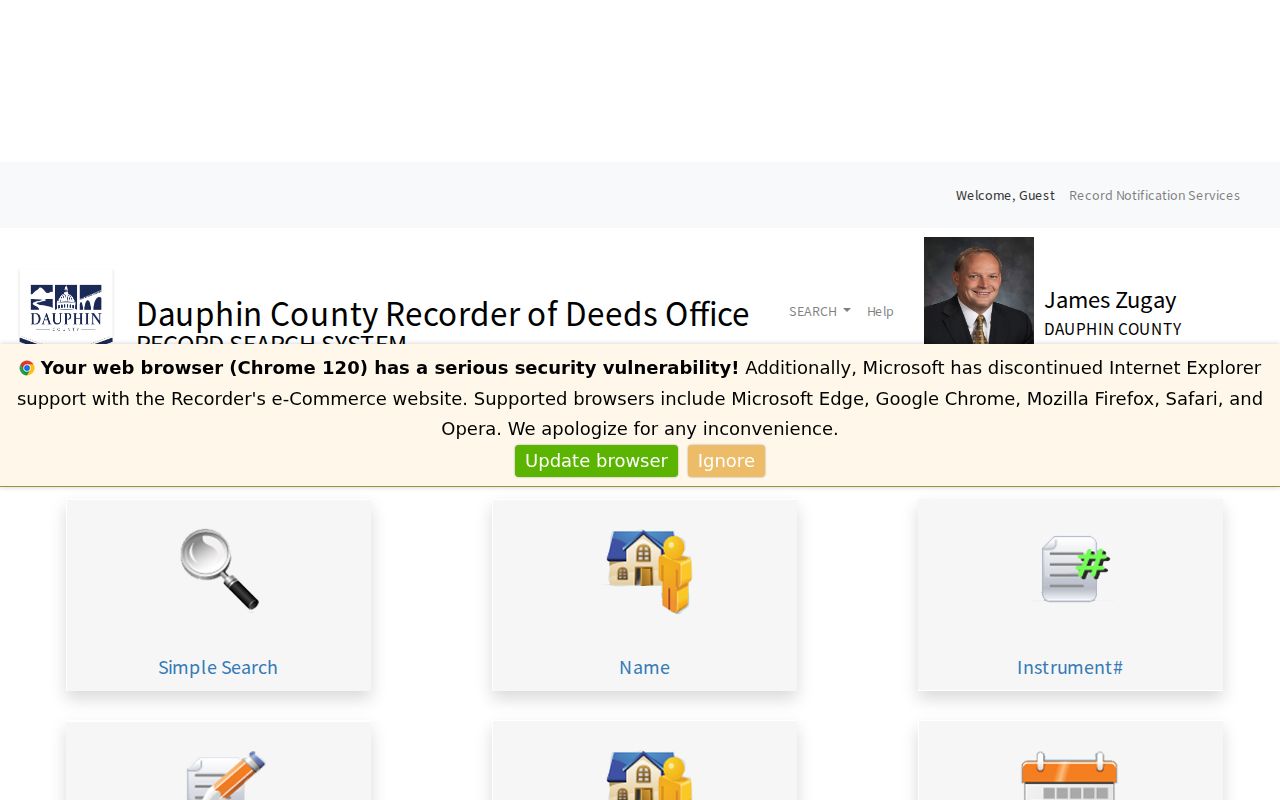
Compare party role, document type, date, and legal description before linking an index result to a particular parcel.
- Parcel or UPI
- A County parcel identifier used to connect land records and recorded documents.
- Index
- A finding tool that points to a record; it is not always the full official document.
- Grantor and grantee
- The party conveying an interest and the party receiving it in a recorded instrument.
- Situs address
- The physical address of the assessed property, distinct from an owner mailing address.
Dauphin County Court and Estate Searches
For public Common Pleas dockets, the County directs users to the statewide Pennsylvania Judiciary portal. Search by Participant Name, select Dauphin County, and choose an appropriate docket type. The docket is an index to court activity. Sealed, juvenile, expunged, or restricted information may not appear, and a file or certified copy remains with the court custodian. Civil matters use the Prothonotary’s CountySuite channel, while estates, marriage licenses, and Orphans’ Court matters stay with the Register of Wills.
The Pennsylvania Judiciary Case Search capture illustrates the participant, county, and docket filters.
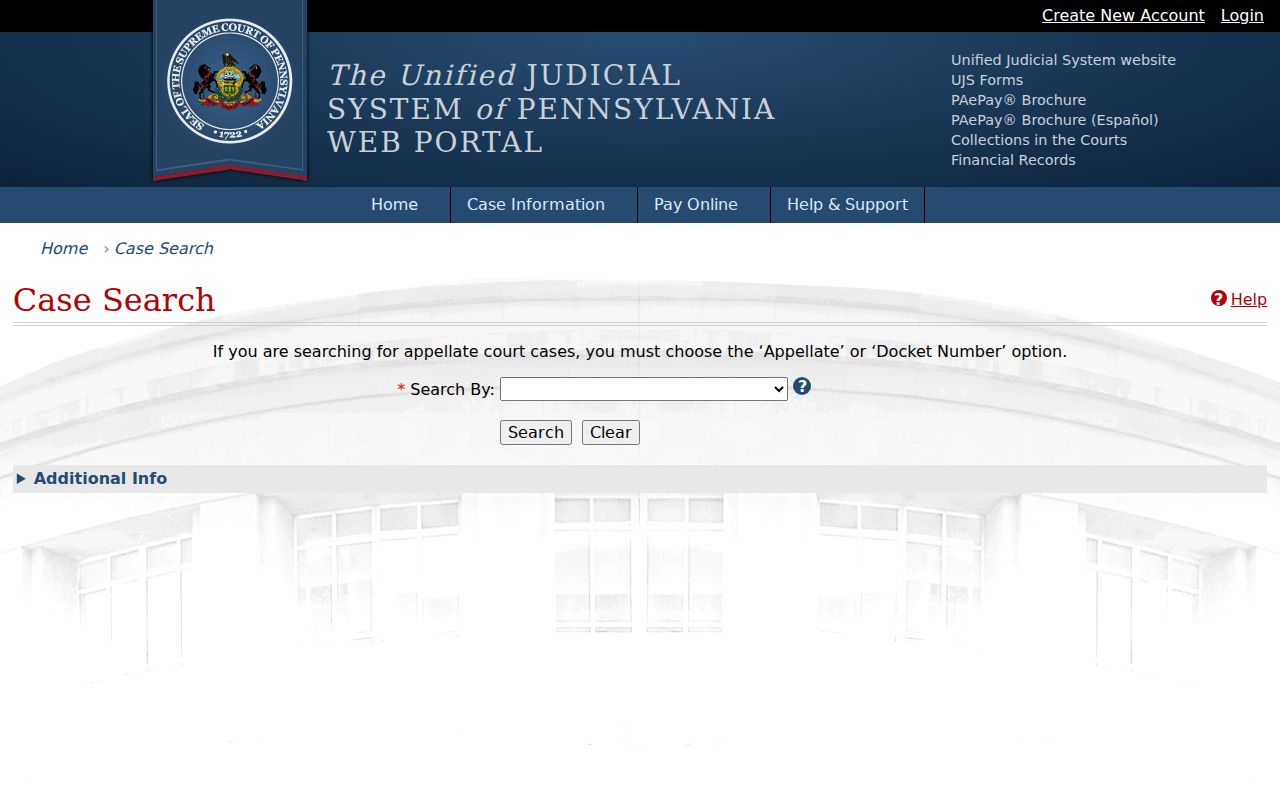
Use a docket number and court division to request the right local record, rather than relying on a name alone.
The Register’s cloud system is a separate route. Registered users may search and view images free; its stated charges include $0.50 per downloaded page plus a $2 transaction charge, or a $25 monthly subscription. That service can place an estate or marriage record, but the office supplies certified records. The Clerk of Courts maintains criminal files and public terminals, while the Prothonotary holds civil records. The Clerk’s published process calls for a written county criminal-record request and does not provide case information by telephone. A docket search, a civil portal, and a probate search therefore lead to different desks even when the same name appears in more than one result.
The Register and Orphans’ Court Cloud Search capture shows the office’s separate public-search access point.
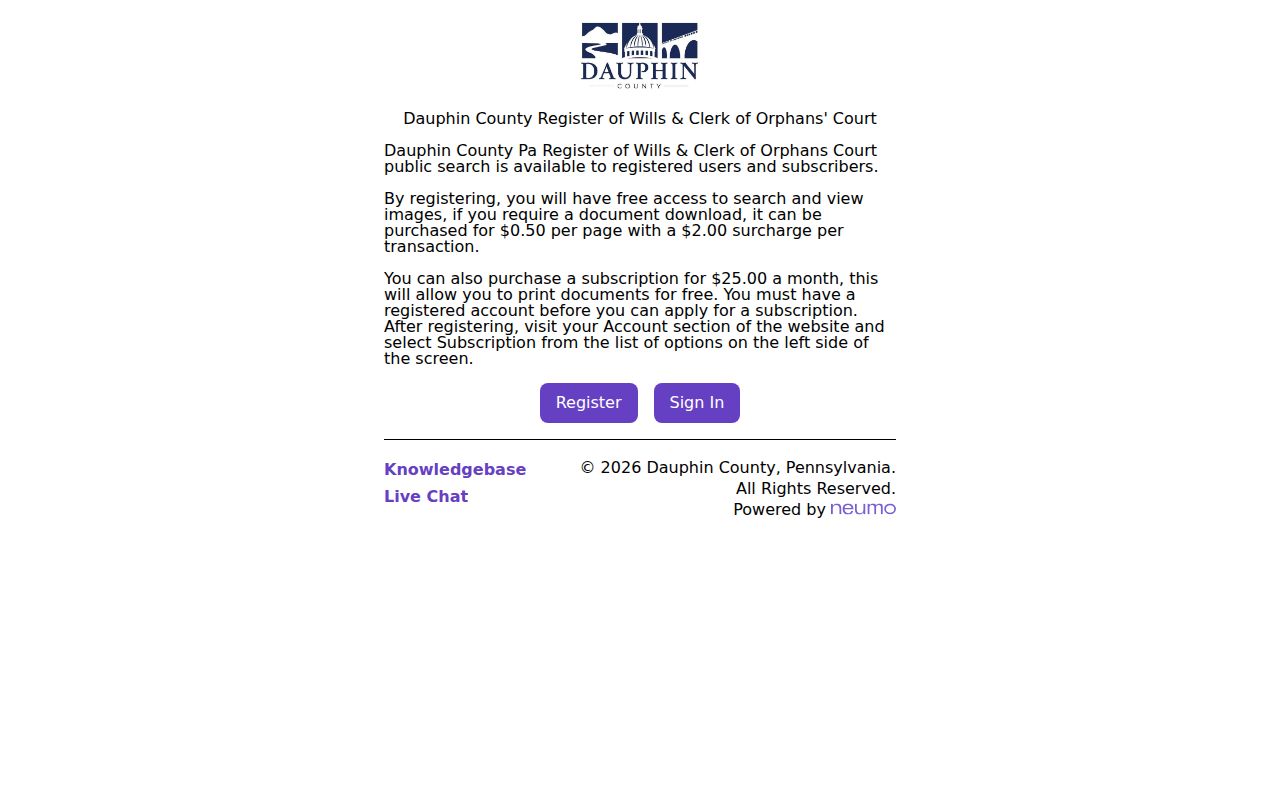
An estate number, date, and issuing office make a more reliable research trail than an unexplained name hit.
Dauphin County Voter Record Boundaries
Pennsylvania’s Check My Voter Registration tool is an individual status, ballot, and polling-place channel. It is not a general street roster. The Pennsylvania Election Code permits defined public-information lists under 25 Pa.C.S. § 1404, but the state request form requires purpose and identity attestation. A requested Street List and Walking List have their own fields and conditions, including the listed $20 county fee.
The voter-status form capture shows the official individual lookup route used by Dauphin County voters.
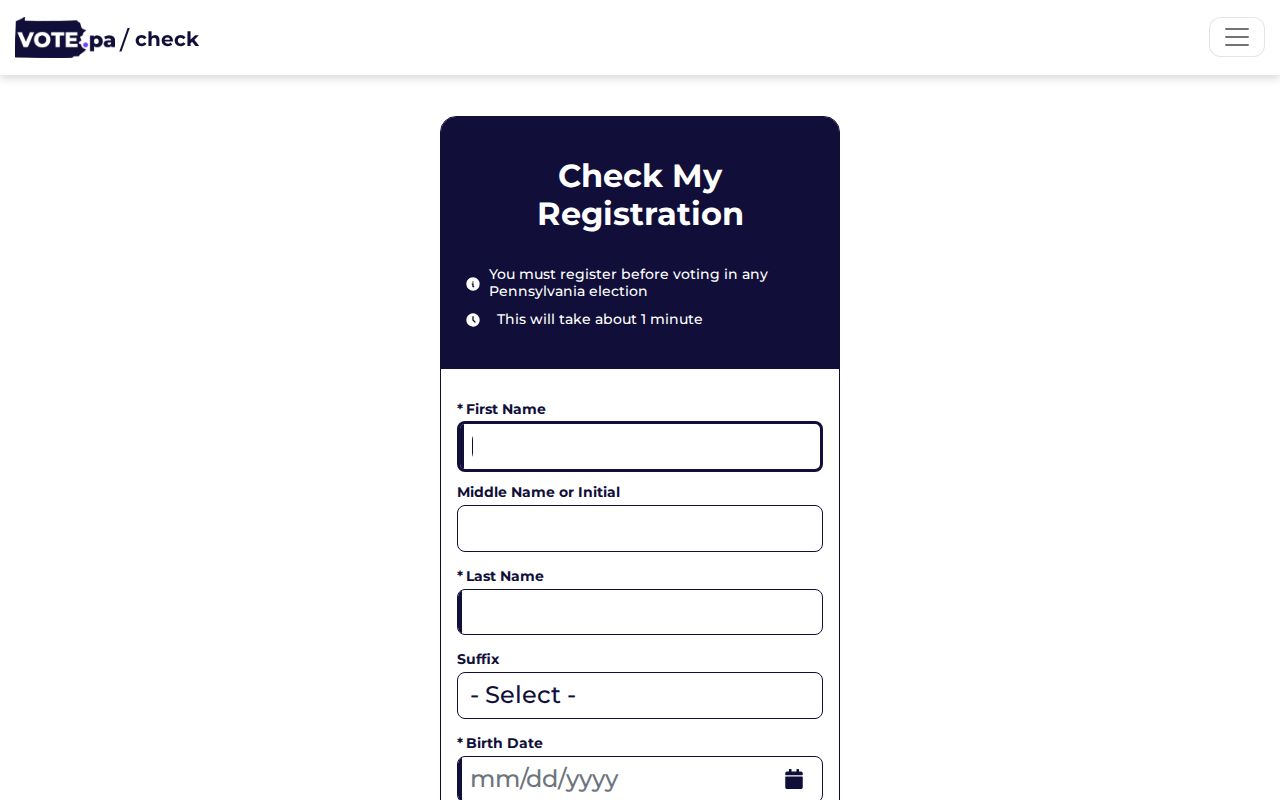
Use the status tool for its stated purpose and direct questions about list conditions to Dauphin Registration & Elections.
Dauphin County Vital Record Timelines
Vital-record research has two local timelines. The Pennsylvania Department of Health holds statewide birth and death records from 1906 forward. Dauphin County’s Register of Wills preserves local birth and death records from 1893 through 1906, marriage licenses from 1885 forward, and older estates and Orphans’ Court records. Noncertified Pennsylvania birth records become public after 105 years and death records after 50 years under the state genealogy program. At the research date, that reaches births through 1920 and deaths through 1975.
The Department of Health ordering page capture is the starting point for official birth and death copy channels.
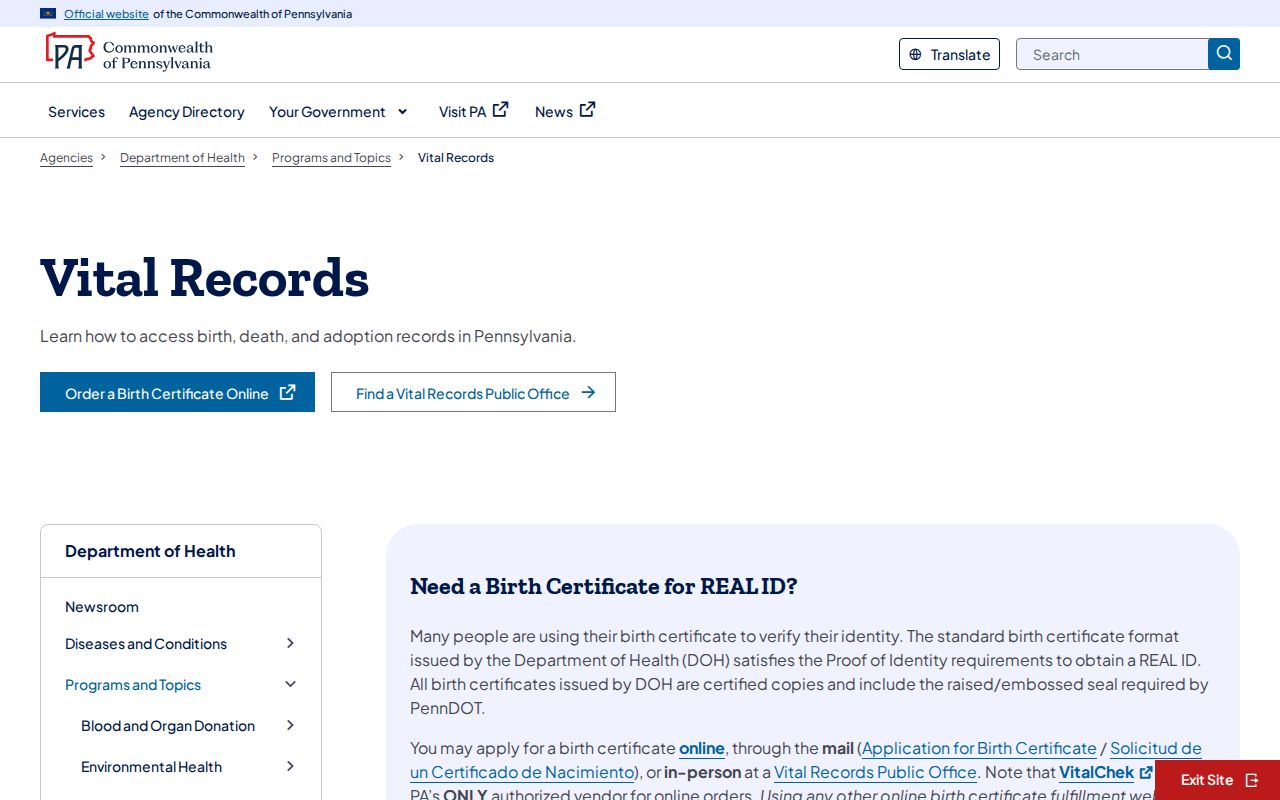
Use the county office for its local pre-1906 holdings and the state genealogy channel for public-period archival copies.
Historical Dauphin County Resident Directories
The Historical Society of Dauphin County holds a long, but not continuous, run of Harrisburg directories from 1839 through 1999. The Alexander Family Research Library adds church records, cemetery inventories, newspaper-card files, yearbooks, maps, and will or Orphans’ Court extracts. A directory entry can supply a dated name, address, occupation, or household clue. It does not establish an entire household without corroboration from another dated source.
The Historical Society directory collection capture documents the local shelf and its year-run information.
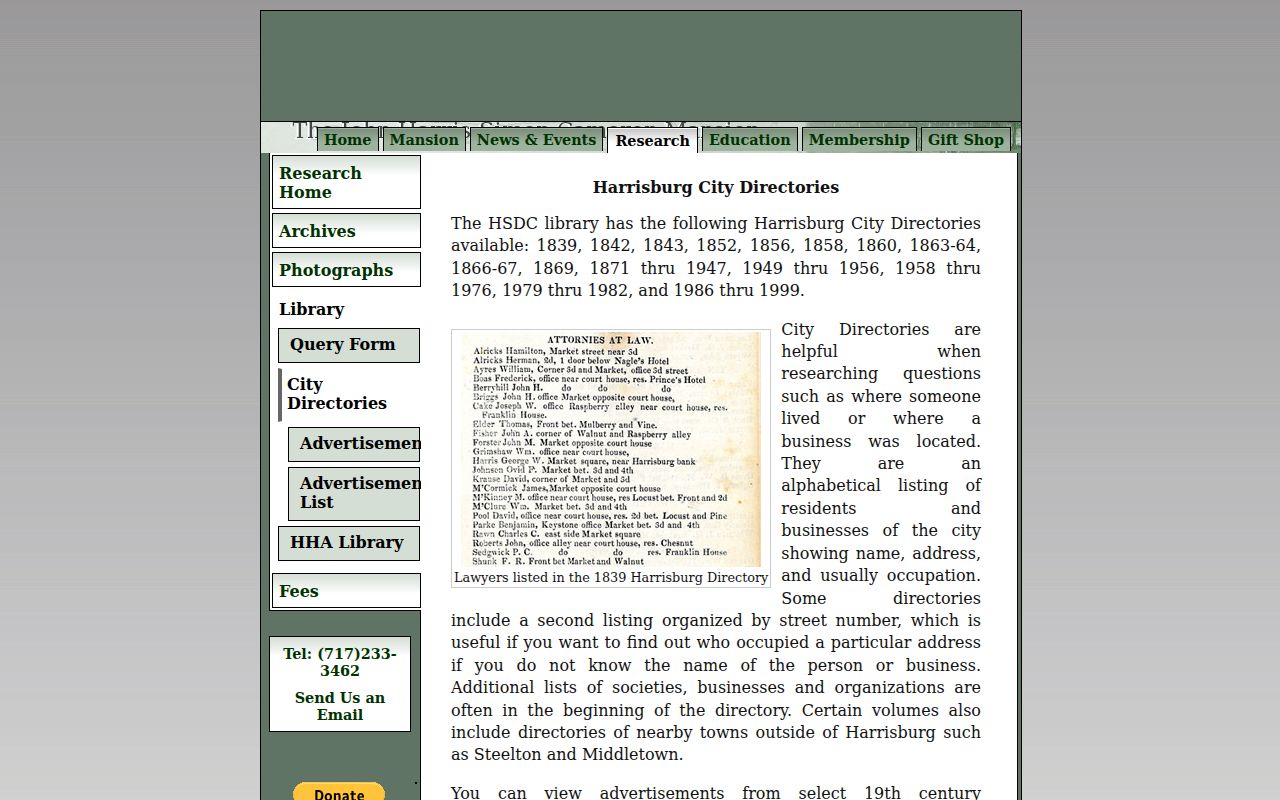
Those volumes are especially useful after a parcel or street name points to a narrow historic time frame.
Dauphin County Address History Checks
Older Harrisburg addresses need a name-and-number check before they are compared with a modern record. The City’s historic-preservation guide identifies Cameron Street as former 11th Street and Green Street as former Two and One Half Street. It also warns that individual house numbers changed. Its Sanborn map guidance covers 1884, 1890, 1905, and 1929 editions. A literal search of only the modern street spelling can therefore miss a dated entry.
The County Recorder says deeds and miscellaneous documents reach back to 1785, yet its older public-access help identifies January 1, 1979 as the beginning of a subscription index. Treat those descriptions as different access channels. For an early conveyance, bring the known parties, approximate date, book and page, or legal description to the Recorder counter and use the Alpha Index.
Dauphin County Records Request Route
The Pennsylvania Right-to-Know Law, Act 3 of 2008, is a way to request existing agency records when the correct office does not provide a public search. A request should name the office, record type, person or address where relevant, date range, and desired inspection or copy format. Under 65 P.S. § 67.901, an agency normally has five business days to grant, deny, or issue an extension notice. The law does not override confidential vital records, sealed court files, protected voter data, or other record-specific limits.
The Office of Open Records request-channel capture links the form and guidance for a specific agency request.
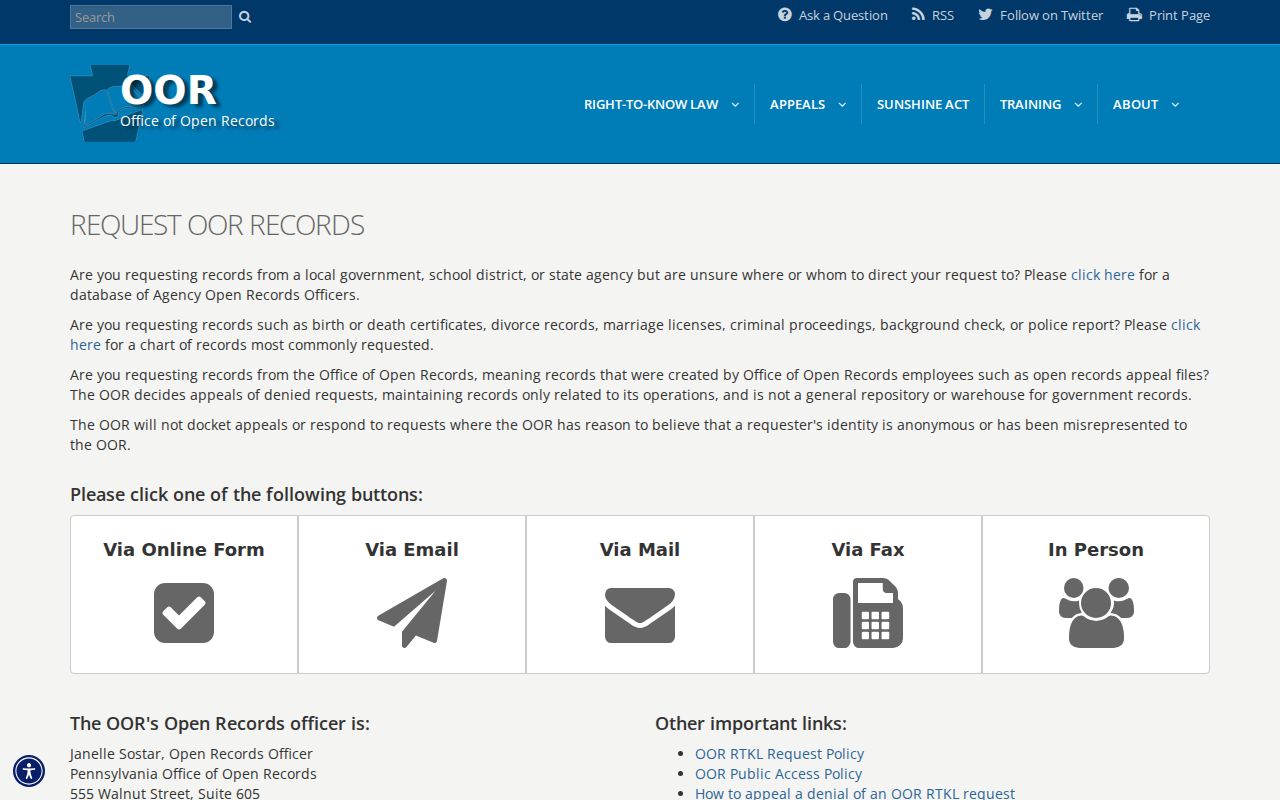
Direct a request to the agency open-records officer, then appeal a denial or deemed denial through the Office of Open Records within its stated deadline.
Note: A precise request for an existing administrative record is more useful than asking an agency to construct a new person list.
Dauphin County Record Verification
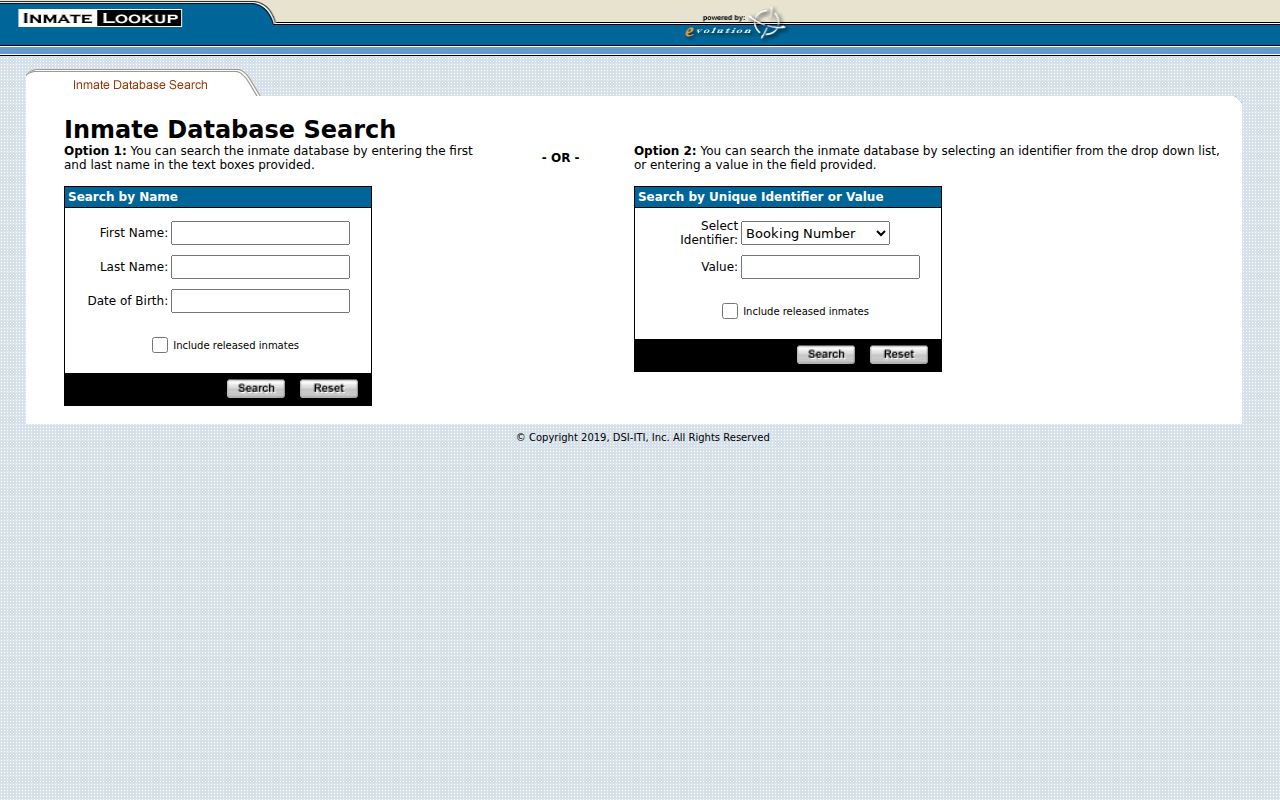
Use official records to test a narrow fact. A parcel number and legal description fit a land question. A docket number and court fit a case question. An issuing office and date fit a vital or license question. The County prison has an inmate lookup for county-facility custody, while the state locator serves state-sentenced inmates and parolees. Each resource has its own scope, so an empty result does not prove that a person has no record elsewhere.
The Dauphin County Prison lookup capture represents a custody-specific source rather than a general directory.
Keep a custody result within that source’s stated role and verify time-sensitive details with the responsible office.